Directus vs Strapi: How to Choose in 2026
The thunderous signal in every Directus vs Strapi discussion isn’t features or licensing.


This article is for the people who have to explain their choice to their colleagues, their board, or their future selves, in person. The choice between the two is feasible. Both have their issues. The appropriate choice for your situation is based on who owns your database, your workflow, and on what your team is capable of maintaining without a specialist on standby.
What the Directus vs Strapi Choice Is Actually About
In fact, when you strip away the marketing, the debate ultimately comes down to one main question. Does your database exist, and do you need it to continue functioning the way it does now?
Directus describes itself as a “Layer” built on top of an existing SQL database. It reads the schema, constructs an Admin interface and APIs, and gets out of the way. Your database remains the source of truth. Strapi, on the other hand, is the opposite of Directus. You create your content types in Strapi, which then manages your tables. The CMS is now the source of truth and the database is an implementation detail.
This distinction determines how you are going to answer the majority of downstream questions. It impacts migration costs, access to reporting, how your team is going to be able to debug, and how you are going to ultimately be able to leave. If you want a broader overview of the landscape before you narrow down to the two, our headless CMS comparison for founders positions Directus, Strapi, and Sanity with respect to Contentful and WordPress.
There are a few reference points that are helpful. After its inception on December 12, 2012, Directus was developed about two years prior to Strapi. Strapi is more visible to the public, as there are about 72,000 stars on Strapi’s GitHub versus about 35,000 for Directus. That gap, per this Directus and Strapi comparison, makes a difference during the hiring process and Stack Overflow answers. However, it doesn’t speak to whether Strapi will work better for your data.
The RAM Problem Nobody Puts on the Landing Page
Memory consumption is the primary complaint among Strapi users, and it comes up on X in at least three different languages. It’s also what determines the few “we switched” cases that have been published. Directus is said to “be much lighter,” but the same Directus developers write that it is “not problem-free either.”
Take this with the right level of confidence. There is no independent benchmark suite behind the claim, only converging practitioner sentiment. A single third-party comparison in an independent Directus and Strapi review reported about 180 MB memory use for Directus against 250 MB for Strapi in their test configuration, with response times of 33 ms versus 130 ms and startup times of 5 versus 8 seconds. Those are specific to the reviewer’s configuration, and cannot be generalized. But they do align with what practitioners are saying.
In circumstances where you have a 100 MB memory advantage, Directus is typically the safer choice over Strapi if you’re using small VMs, cost-effective hosting solutions, or shared hosting services. However, if your hosting budget can already accommodate a Node process with headroom, the memory difference matters less than the admin experience your editors will actually use.
Two Admin Interfaces, Two Different Users
The admin panel is where the CMS decision is either won or quietly regretted. Your database philosophy will not come up in a Monday standup. The editor who has to publish under pressure will.
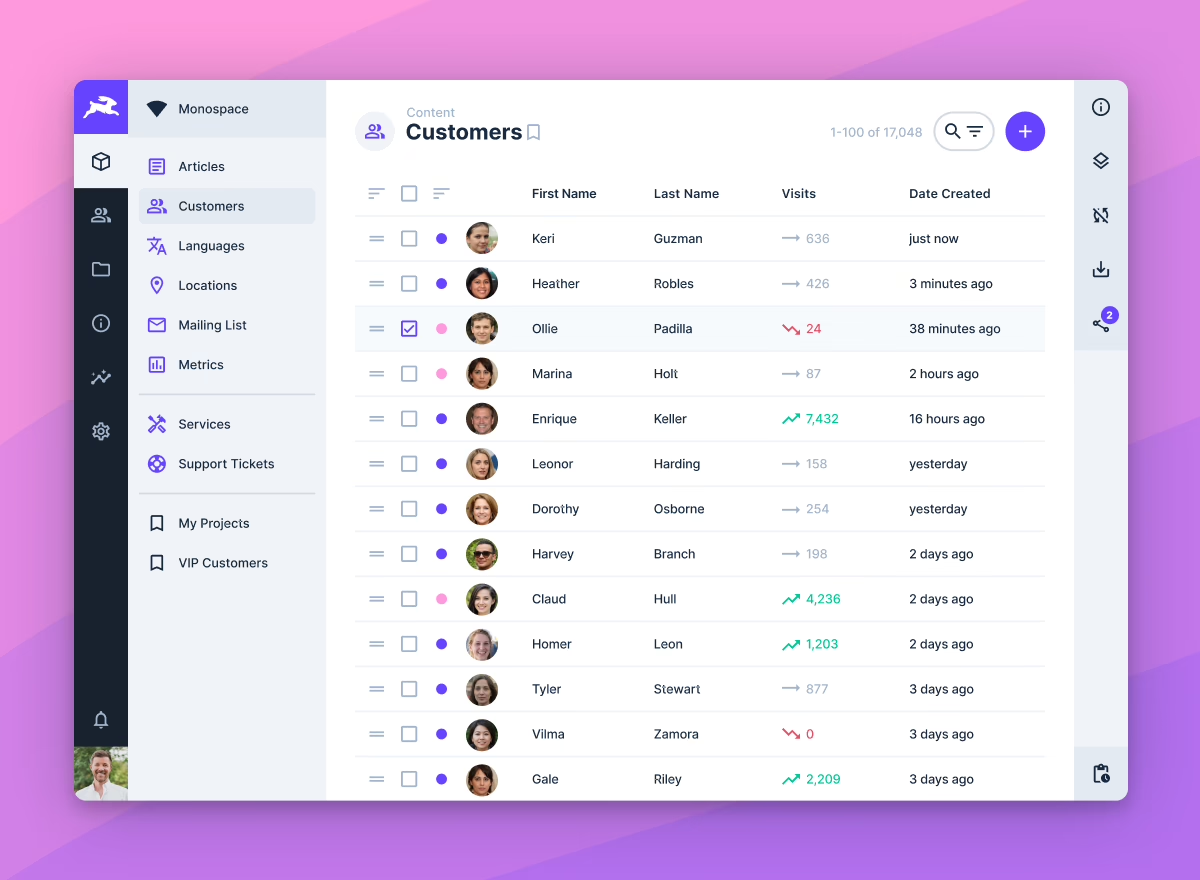
Structured around posts and collections, Strapi’s Content Manager is ideal for users who think in these terms. Editors open collections, fill forms, connect related items, and publish. It provides a modern take on a CMS to which users are accustomed. Because of this design, teams that contain writers, editors, or marketers who have experience with WordPress or Contentful will take a liking to it.
Directus has a structure similar to that of a spreadsheet. Records appear as rows in views that support advanced filtering and sorting, as well as bulk edits. This structure helps teams edit directories, catalogs, schedules, etc. Directus probably won’t be of great help to teams that need to create long-form content with an accompanying photo and author byline, for example.
Strapi’s CPO has run four iterations of the same GitHub post prompting the community to state what they think is the most frustrating element of Strapi. The latest post has 76 comments. The team listening to community feedback is a good sign. It’s also a sign that admin UX gaps are chronic. The left sidebar has no option to group content types to create collapsible sections. A typical issue is that a project containing twenty collections is far from user friendly.
Directus’s most visible open GitHub issue is different in character. A GraphQL schema issue with 21 reactions notes that required fields are not enforced in the generated schema. If you are using GraphQL to set or validate types in your front end, it is worth reviewing this issue, as it potentially impacts your work.
Three Scenarios Where the Answer Actually Diverges
Generic suggestions break down when they encounter real-world problems. This is typically how our clients make their decision when we assist them with it.
SaaS with an existing product database
You already have a PostgreSQL or MySQL database that drives your product. If marketing wants to create a CMS layer for content, help articles, or internal admin tools, Directus is almost always the better choice. It operates with your existing schema and doesn’t require you to build it again. Your engineers can continue to use the database building tools that they are already familiar with. If you try to build what is already a production schema with Strapi, you’ll either have to build an adapter or accept that you have two sources of truth. Neither of those options is preferable.
New editorial platform, no legacy database
For a newsroom, a publishing house developing a new vertical, or marketing websites that need to be built from scratch, Strapi is the better option. The content type builder is fast, editors get an interface that is geared toward their style and workflow, and the Node.js ecosystem has more people who can extend Strapi. When we worked with Teton Gravity Research to move 10,000 articles from their legacy CMS in this platform rebuild, the more difficult challenges we faced were not the APIs. The more difficult challenges were preserving their workflow and protecting the history of their editorial work while we built the new platform. This is the sort of challenge that Strapi is designed to help with.
Ecommerce with connected catalog data
This is the most common spot where teams mess up. If your product, pricing, and inventory data live in SQL and connect to an ERP, search index, and a storefront, Directus lets you implement the CMS on top without disrupting any of the integrations. If you’re building a catalog model from scratch in Node.js, Strapi is cleaner. Also, test bundles, regional catalogs, and stock updates before making either decision. A model that seems simple for a single product line usually falls apart when variants and local pricing come into play.
What You Actually Pay to Run Either One
The license is the least of your worries. The real cost is the infrastructure, cost of updates, cost of editor training, and the cost of unraveling a bad data model.
Directus is free forever for self-hosted use as stated on the Directus start page. For SSO, you need a paid plan. Strapi’s Community edition is MIT licensed and free to self-host in production at no cost. Features are available in self-hosted or Strapi Cloud environments.
Package demand gives a ballpark estimate for ecosystem depth. One recent comparison in this API-first CMS market analysis states that weekly downloads for @strapi/strapi are 163,000, and those for directus are around 10,000. A larger ecosystem for Strapi helps with hiring and Stack Overflow answers. It also means more dependencies, more moving parts, and a larger surface area for breaking changes.
Ask your development and delivery team partners a few final questions to get their opinions.
- Infrastructure: where do the database, CMS, media, and backups actually run, and who pays for each?
- Maintenance: who applies security patches, watches failed jobs, and handles the next major version bump?
- Access: how many admins, and does SSO become a hard requirement in the next twelve months?
- Growth: what happens when you add more editors, environments, locales, or downstream apps consuming the API?
- Exit: can you export in a form another team can actually pick up?
The most cost-efficient CMS is the one that requires the least development time. This is distinct from which platform requires the lowest AWS bill.
If You Are Migrating, Design for the Rollback
No one wants to migrate to a new CMS, but the successful migrating teams are the ones who designed a way to revert the migration should it become necessary. This changes how you build your CMS.
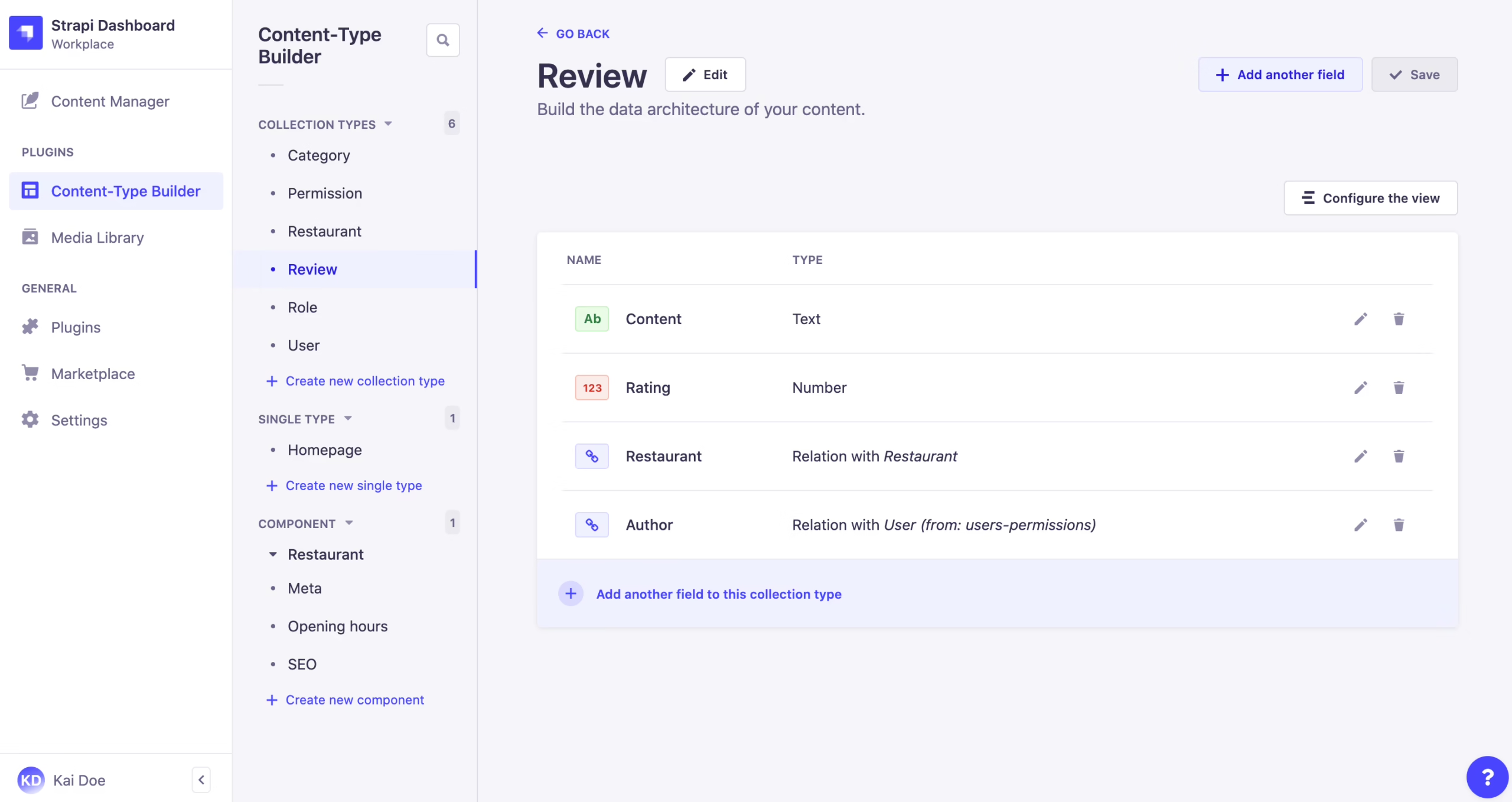
The safest way to do a migration from Directus or Strapi is to audit existing collections and media assets, roles, tokens, webhooks, and integrations. You should also consider whether existing integrations should be retired, kept, or merged. Map the target model before you make any changes to production, and be honest about what fields will not map easily. Directus allows you to preserve an existing SQL database, which streamlines this migration. For Strapi, you will need to develop a new content model, which may be necessary if the old model was problematic.
Do not proceed to production until you have exported your data and validated it in a staging environment. Test the permissions, filters, and previews, as well as the API calls and responses, side by side with the original system. Then, reconnect the front end, authentication, webhooks, and integrations in staging and prepare a short content freeze, a documented rollback, and a planned cutover with check owners for each step.
The largest challenge we faced when building the tech stack for The Hustle’s Trends newsletter was not the CMS. It was aligning the CMS with a payment and email system that had never truly communicated with each other in the past. The migration lesson from this case applies here: a CMS is just one of many systems in a graph and it is the graph that breaks.
We have developed a complete CMS migration service and an entire page dedicated to headless CMS development that cover the types of things most people shortchange: content modeling, redirect design, and the laborious work of confirming the two systems return the same data.
A Short Recommendation
If your existing database is critical, start with Directus. If you are creating a new content-focused product, or an editorially driven product, and want the deeper Node.js ecosystem, start with Strapi. For Strapi vs the other headless CMS offerings in the space, read our Strapi vs Sanity comparison, and for Strapi in product development, read Strapi for products. Most teams using either of these CMSs, with React/Next.js, will learn more from this React CMS guide.
One thing you can safely ignore in any comparison is a definitive answer from someone lacking your data. Both of these systems are used by serious teams in production. The issue that will find you in the long run is not the one described on the landing page. It is the one you did not subject to your own load with your own editors on your hosting. If, with all the risks involved, you are stuck prioritizing which of these matters the most before you build, you’re spot on, this is exactly what a discovery engagement is designed for.
Building a product and unsure what to scope first? Let’s talk. Free 30-minute call, no pitch.

Masoud Golchin is a backend developer at Refact, working on server-side systems, internal tooling, and infrastructure. He builds and maintains the services that support both client projects and the team’s day-to-day development workflow. His work includes backend logic, developer tools, system reliability, and the technical foundations that allow products to scale and operate consistently. At Refact, Masoud focuses on creating practical engineering solutions that help the team move faster while keeping systems organized, maintainable, and dependable.
More from Masoud Golchin
