How to Create a Subscription Website That Lasts
You will find that most guides are barking up the wrong tree.


The numbers don’t lie. Recurring billing benchmarks from the big payment processors put total churn from failed payments at 20 to 40 percent in any healthy operation, and that is before a customer has even made up their mind to go. If the technical side were the hard part, those figures would be a fraction of what they are.
The real work is in the offer and the operational habits that make a member feel he was right to sign up six months down the line. It is in how you handle the first fortnight after signup or a declined card. This guide is for anyone with a SaaS product, a paid newsletter, a coaching community or a subscription box who wants to get through those decisions in the proper order.
Start With the Business Model, Not the Platform
Tool choice is what everyone wants to know first, yet it is the least helpful place to start. Get the platform before you have your offer figured out and you will be twisting the offer to suit the software. An expensive mistake to reverse.
So start with the value unit. What is the monthly fee actually buying? In my experience the answers fall into four categories:
- A library. People pay for breadth and search – video archives, research, templates.
- Guidance. Coaching or advisory access. Here the member is paying for a room or a person, not a file.
- Timed transformation. A cohort course with a definite beginning and end; renewal is a new call to action.
- Perks and belonging. Status and identity from an association or branded community.
Each of these requires a different kind of site. A library demands good analytics and filters. A coaching setup needs moderation and scheduling. Put together a “membership site” without deciding on one and you will wind up with feature sprawl and no clear promise.
Then there is the delivery rhythm. A subscription is a calendar-bound promise. If you can’t tell me what ships each week and who is responsible for it, your model isn’t ready, plugin or no. We see reader-facing businesses in particular short-change this area; we have put our thoughts on the pricing and packaging tradeoffs in our reader revenue models guide.
Rent, Buy, or Build: A Frame That Actually Helps
When the offer is in focus, the platform question simplifies to three options.
Rent it. Go with a hosted solution where the subscriptions are pre-wired. It is the quickest way to test demand without an engineering bill, but you will be paying monthly fees for the privilege and ceding some flexibility.
Buy it. WordPress with a solid membership plugin, your email tooling and a processor. You get a mature workflow and control, but you also take on the discipline of updates and the occasional plugin conflict.
Build it. Custom development on a Next.js and Postgres stack with Stripe. Unless your data model or member experience is so idiosyncratic that off-the-shelf tools are in your way, this is rarely the play on day one.
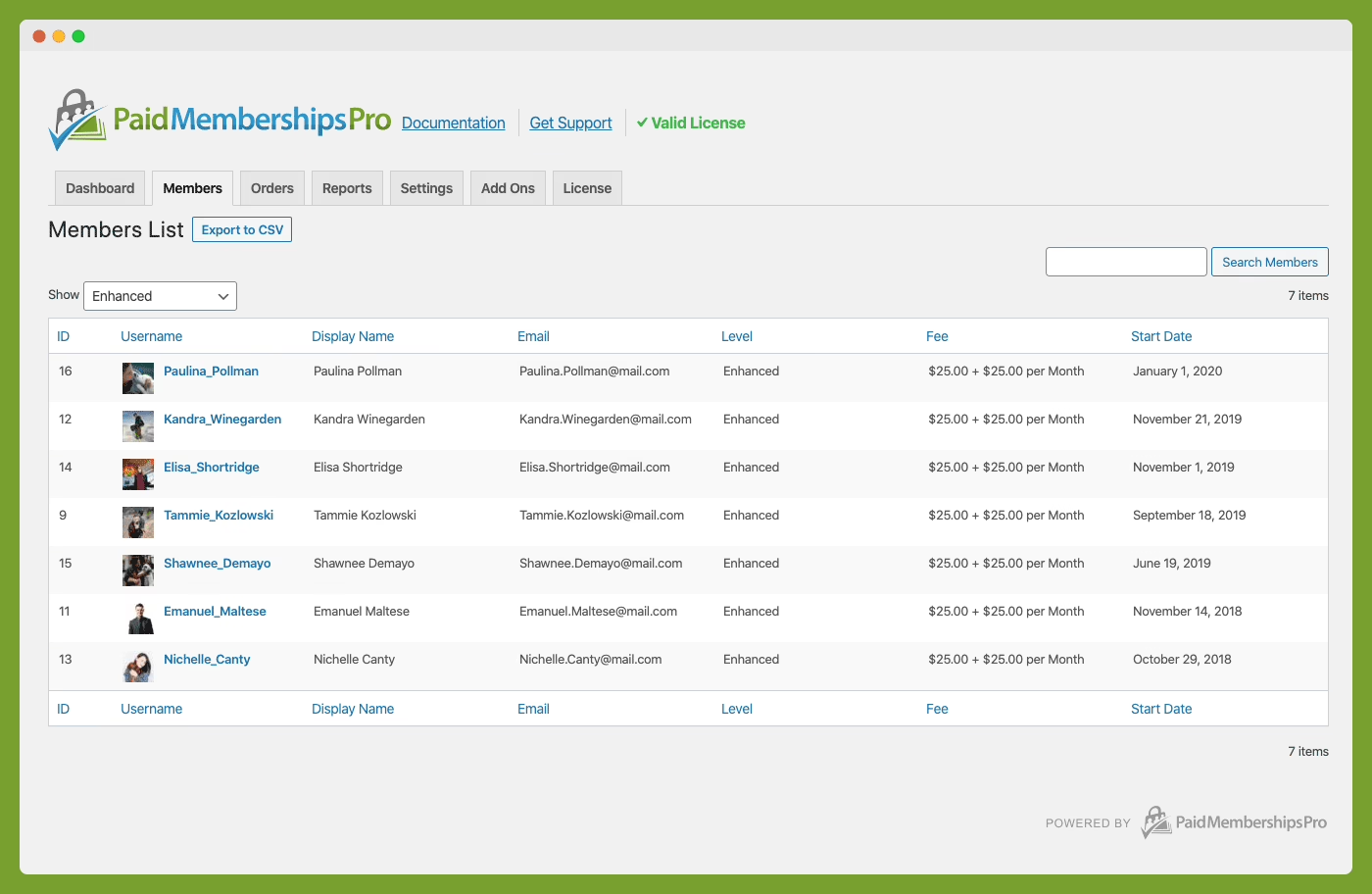
If you are on WordPress, heed the advice you will hear in practitioner circles: leave WooCommerce alone for memberships. It is made for one-off transactions. For recurring tiers and drip content you want a purpose-built plugin like MemberPress or Paid Memberships Pro. Trying to make WooCommerce do its job is a recipe for a rebuild. For a rundown on the specific fit questions, have a look at our best membership site platforms comparison or the longer piece on how to build a membership website.
Decoupling the marketing site from the membership backend
There is a pattern to the sites that scale well: they keep the public marketing face separate from the paid backend. The former does the SEO and conversion; the latter deals with entitlements and accounts. They are linked but distinct. That way you can rework the marketing site without disturbing the paid area. Teams that try to run both in the same WordPress install are usually looking back on it with regret by year two.
The Billing Layer Is Where Most Guides Get Lazy
Articles will tell you to “connect Stripe” and call it a day. The easy part is over once the first charge goes through.
What counts is what follows. I would suggest three things over any tool:
Have a canonical data model. The one that holds up is Customer to Subscription to Invoice to Payment to Entitlement. Keep the record of what a user can access (entitlements) apart from the billing state so you can grant or revoke it without muddying the financials. Mix them in an ad-hoc schema and you will be migrating your billing provider for nine months.
Idempotency keys are not optional. You need a unique key on every payment op to stop a network retry from churning out a duplicate. Make the Stripe billing documentation your source of truth on this. Build for involuntary churn from the start. In a healthy subscription business you will find that 20 to 40 percent of your churn is down to failed payments rather than disgruntled customers. As Business.com’s guide to membership sites puts it, an automated recovery process or “dunning” is one of the key systems to have in place. Don’t rely on some naive retry logic like “try again every day for a week”, that only makes matters worse. The payment networks will tell you what the right timing is by decline code and a mature stack will have account updaters and network tokens so a reissued card just works without the customer having to do anything.
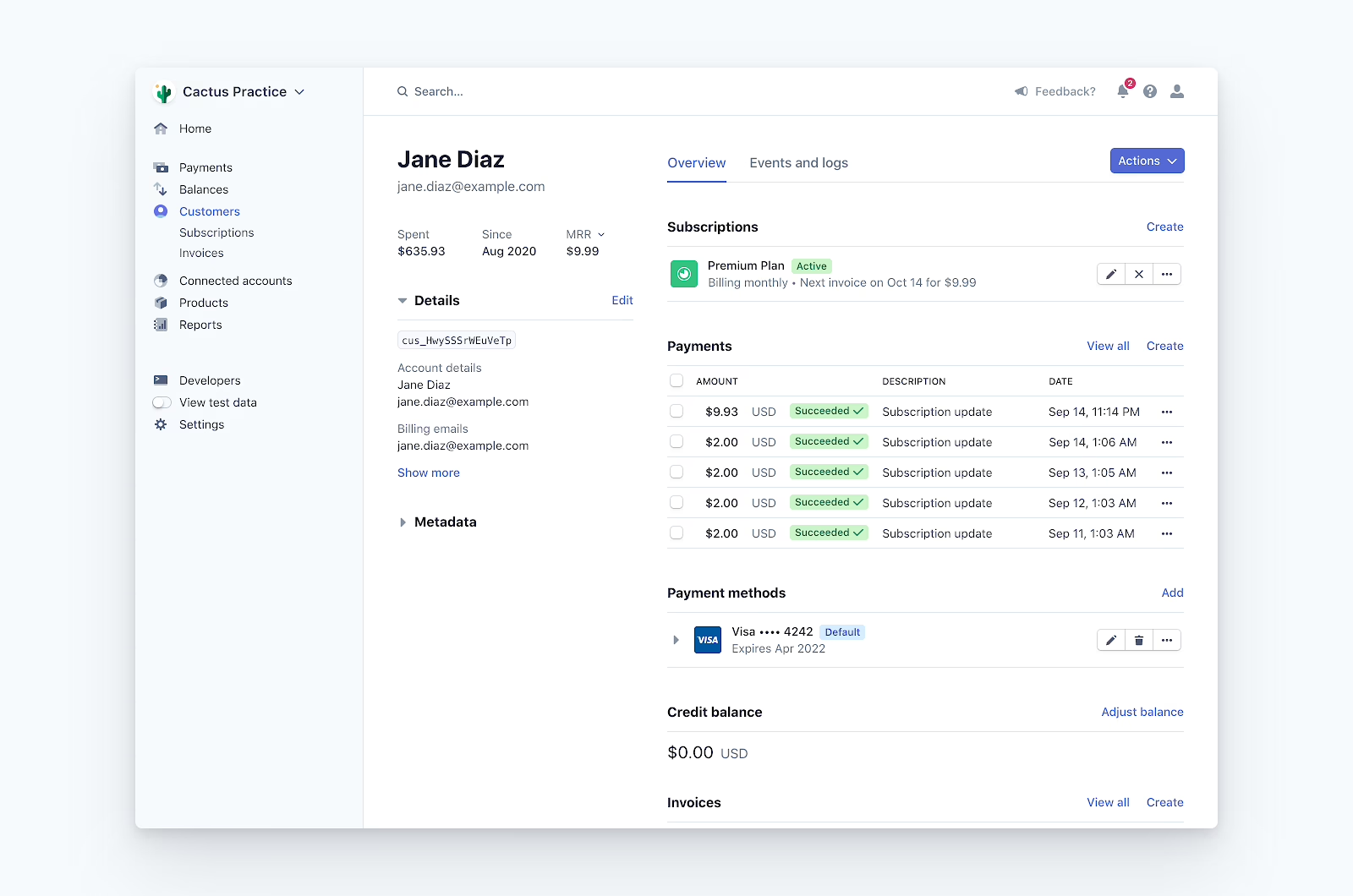
You will run into more production bugs from plan changes than from the initial bill. The semantics of an upgrade or downgrade, prorated credits, billing anchors, whether to issue a refund or an account credit – it is not intuitive. For an early-stage product we would make a case for the simple fix of only permitting plan changes at renewal. You give up a bit of flexibility but you also put an end to a whole class of support tickets that would otherwise be your bane for the first year.
And if the churn math is new to you, our primer on SaaS churn rate will set you straight on which metrics are worth your time and which are a red herring.
The First Two Weeks Predict Retention
Most teams are busy optimising sign-up conversion. But activation is what tells you if a subscriber is going to stick around. Give a new member a discount and they will still leave if they don’t have a useful experience in their first session.
Practitioners tend to follow a 14-day playbook:
- Day 0: A welcome email with a single, clear action. Not a tour.
- Days 1-3: Let them have a quick win they can feel good about.
- Days 4-7: Make a human connection. A personal note, a peer intro or a live session.
- Days 8-14: Show them what is coming so they see the value in staying.
You don’t need custom software for any of it. Just a plan and a three-email sequence and a member area where the answer to “what do I do first?” doesn’t require scrolling. Complicated sign-up flows are a prime cause of abandonment, as TechTimes’ setup guide will confirm, and the rule holds true behind the paywall too.
We were reminded of this when we put together the premium newsletter platform for The Hustle. Their old setup was a patchwork of a CMS the editors had trouble with, an email system that was clearly bolted on and a payment platform that wouldn’t integrate properly. We got their paid tier to market in two weeks with the rebuild, but the real victory was the new stack. Onboarding and content became one coherent system for the premium subscriber from the very first click. That is what a good member experience is all about.
For those in editorial and newsletters, you can read our field notes on how to prevent subscription churn for a more detailed take on the onboarding moves that work.
Pricing, Trials, and Founding Member Offers
Then there is pricing, which is often overthought. Stick to two or three tiers with obvious differentiation; any more and you have decision fatigue, any less and you are underselling. A monthly plus a discounted annual is the sensible default to boost lifetime value and steady your cash flow.
What you see in the market:
- Low-ticket (content/community): $10-$50 a month.
- Mid-ticket (training/hybrid): $50-$200.
- High-ticket (masterminds): $200-$500 and up.
Trials are deceptively simple. Requiring a card will see you convert to paid at much higher rates, though you won’t get as many sign-ups. If your dashboard is set to reward volume, a no-card trial will flatter you while masking a retention issue. Reward the paid conversion and the numbers may look worse but the business is better for it.
With memberships, a founding member offer is usually superior to a free trial. Put out a discounted early-bird rate for the first 50 or 100 and you will have momentum and a group of users to shape the product. We recommend running it as a legacy plan. When you raise prices down the line, let the founders stay on their terms and put new subscribers on the current plan. Force a migration and you will lose your most loyal.
Compliance Is No Longer Optional
Compliance has been creeping up on subscription businesses in three ways.
First, auto-renewal and easy cancellation are now law in multiple jurisdictions. There is a risk of enforcement for dark-pattern cancellation flows, but even aside from that, making it easy for a customer to leave is a brand asset. They are more apt to return.
Second is digital tax. VAT, GST and the like are based on the customer’s location, not yours. Use a tax engine that handles rate updates and keep your evidence. Nothing is as painful as a growing company having to come to terms with back-owed liability because they didn’t design for it on day one.
Finally, privacy and data residency will dictate your support tools and where you can store data. It is boring until it isn’t. Much cheaper to bake it into the architecture than to retrofit later.
Launch Is When the Real Work Starts
You might think the site is done once it goes live, but in truth that is only where operational discipline begins to outweigh your build decisions.
Here is a sensible rhythm for after launch:
- Weekly you should be on top of failed payments and dunning recovery. Make sure the retry sequences have fired and the recovery emails are ones people will actually act on.
- Monthly is the time to go over why people are cancelling. You want to spot patterns in pricing pushback or unmet expectations, perhaps a gap in your content.
- Quarterly calls for some housekeeping on the product. Tidy up the member area, remove any dead ends and put some edge back into the “start here” flow.
As for metrics, don’t get lost in a dashboard. Keep an eye on a few key figures: MRR, ARPU, LTV, CAC and your churn (voluntary and involuntary). There is little point in fixating on cross-industry benchmarks since they are not really comparable; use them for context. Your own cohort trends are worth more than what you read on a blog.
There is a common trait among the founders who have made a success of subscription models. They don’t see the site as a project they shipped and can put away, but as a product requiring some care. You will see this in the best partnerships too, which often run 12 to 24 months instead of wrapping up at launch. The kind of compounding you get from proper billing, an email audience you own and a well-oiled onboarding process takes months of iteration to put in place.
Then there is the question of whether to rent, buy or build. If you want to have that decision pressure-tested before you put down the budget, Refact’s membership platform development is designed to give you that early clarity. After all, the technical stack is a commodity. The real value is in the judgment of which one suits your offer and what you should be building first.
Building a product and unsure what to scope first? Let’s talk. Free 30-minute call, no pitch.

Saeedreza Abbaspour is the CEO of Refact, where he works across product, engineering, and sales. He sets the studio’s direction while staying closely involved in the work itself, from shaping product strategy and UX architecture to helping define the technical systems behind Refact’s projects. His role connects business thinking with hands-on product execution, giving him a practical view of how software should be planned, built, launched, and improved. At Refact, Saeedreza focuses on building a studio that can move quickly, solve real client problems, and turn ideas into reliable digital products.
More from Saeedreza Abbaspour

