How to Build an Online Community That Lasts
A Discord server can hit 4,000 members in a weekend and still be dead by the end of the month.
 Masoud TahsiriOctober 2, 2026
This guide covers how to build an online community that lasts. It is written for brand teams, publishers, membership organizations and operators who want a space where members come back because of each other. The software is rarely what goes wrong. Most communities fail on behavior and design: who gets invited first, what happens in the first week, how trust gets maintained, and whether the space can run without the person who started it.
An Audience Is Not a Community, and the Difference Is Testable
A community is members forming relationships with each other. An audience is people receiving what an organization broadcasts. Both can live on the same platform with the same member count. You can only tell them apart by how people behave.
Practitioners who have run communities for years tend to use three tests:
- The interaction test. Do members reply to each other, or only to you? If every thread is a post from the host followed by a few replies to the host, you are running a comment section.
- The vacation test. If you stepped away for a week, would the space keep moving? If it goes quiet the moment the host stops posting, it was a group chat built around one person.
- The post-hype test. Once the launch buzz, the giveaway or the conference ends, do people still show up? Signups are easy to get during hype. Retention shows whether anything real formed.
These tests matter because they change what you work on. If you measure activity by your own output (announcements posted, FAQs pinned, events promoted), you will keep producing more of it. The space will stay fragile, because nothing in it depends on members talking to one another.
Answer Four Questions Before You Choose Software
Most communities that stall never made four decisions. Write the answers down before you compare Circle with Discord.
- What specific problem does the community solve? “Help professionals connect” is too vague to design around. “Help independent museum directors find practical funding advice from peers” tells you who to invite and what they will talk about.
- What one behavior should the space drive? Asking for advice, sharing work for critique, finding collaborators, or answering product questions. A community can support several activities, but it needs one central habit.
- Why is this better than the free alternatives? Your members already have subreddits, LinkedIn groups and private group chats. Your answer might be tighter moderation, verified membership, a searchable archive, or direct access to the people building the product.
- What does success look like at month six? Pick something you can observe: founding members still participating, a steady flow of answers from peers, or enough useful discussion to support a paid tier. Member count alone is the wrong target.
Get these answers by talking to the people you want to invite, not by brainstorming. Ask about the last time they hit the problem, where they looked for help, and what annoyed them about the options. These interviews are the same work covered in our guide to product discovery techniques that work. A waitlist of 200 people shows curiosity. It does not show that anyone will participate.
A useful rule: do not build the room until you know what members will do in it on an ordinary Tuesday.
Choose a Platform for Its Constraints, Not Its Features
The practitioners in our research agree that most community failures are not tooling problems. Platform choice still matters, though, because it decides who owns the data, how much of the member experience you control, and how painful it is to move later.
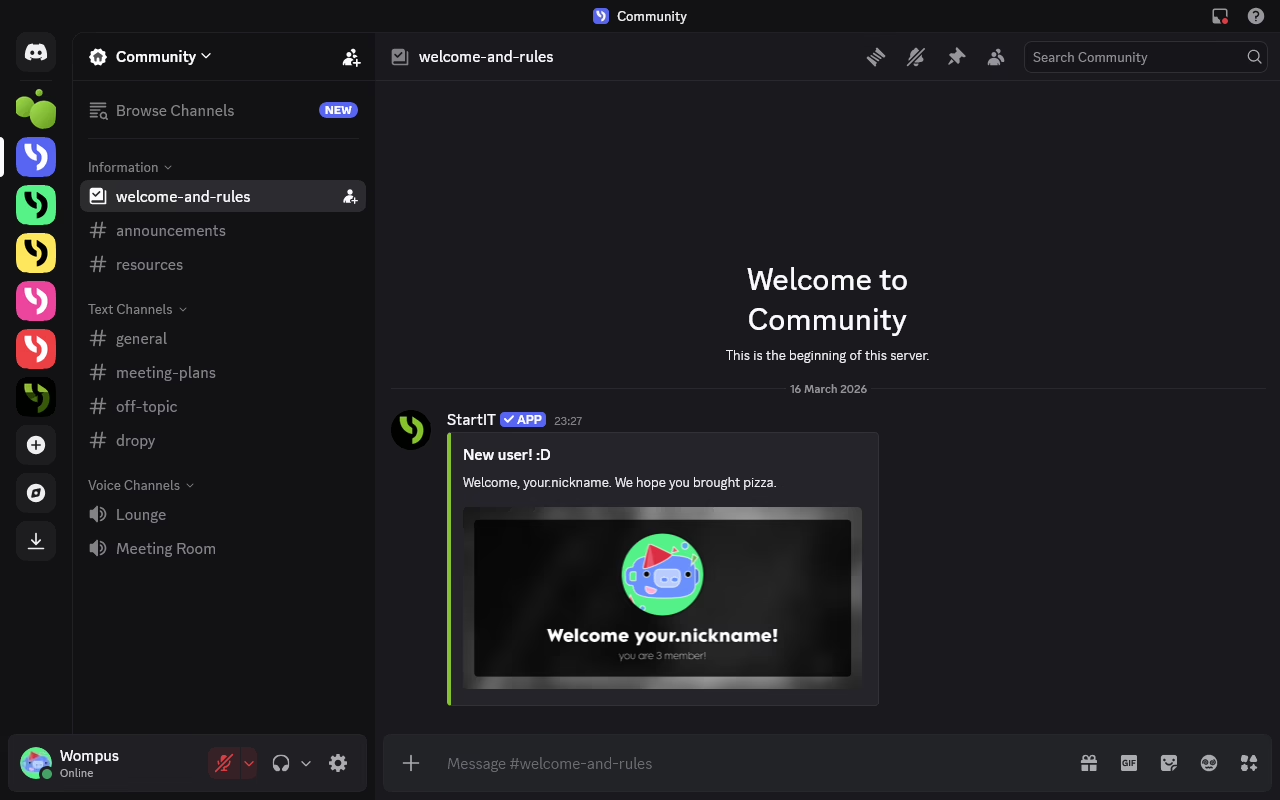
Free social platforms such as a subreddit, a Facebook Group or a Discord server are fine for testing whether a topic has energy. The tradeoff is control. You live under another company’s rules, discovery systems and export limits, and members may connect the space with the platform more than with you.
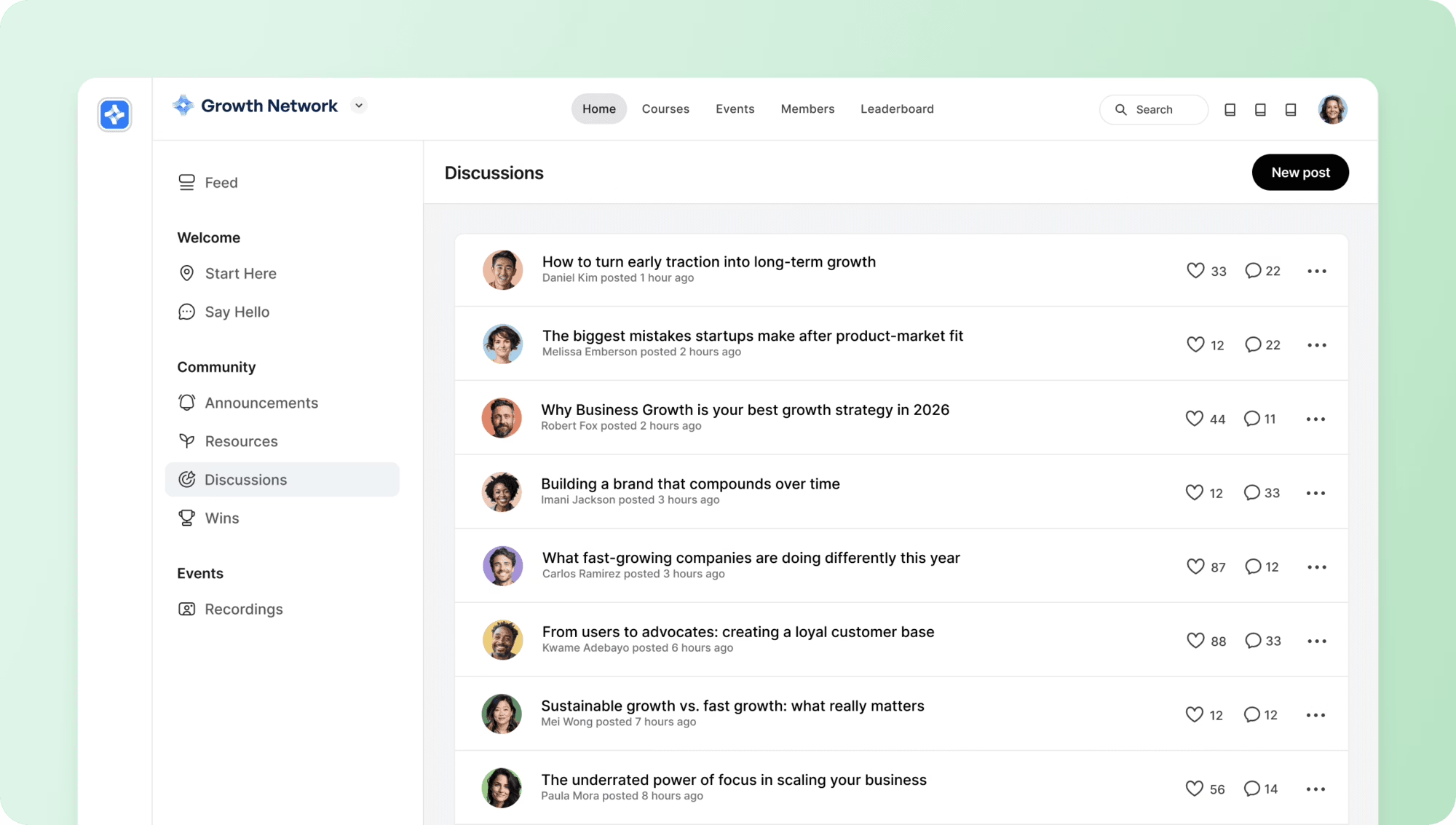
Hosted community software such as Circle, Mighty Networks, Skool or Slack gives you profiles, events, email notifications, paid access and private areas without a build. Subscription costs rise with usage, and some platforms make it hard to leave.
Self-hosted options such as Discourse, WordPress with a membership layer, or a custom application connect the community to your website, content, payments and customer records. You also take on maintenance, security, upgrades and troubleshooting.
| Platform type | Setup effort | Data ownership | Member experience | Cost at scale | Best for |
|---|---|---|---|---|---|
| Free social platform | Low | Limited | Familiar but generic | Low to start | Testing a narrow idea |
| Hosted community software | Low to moderate | Moderate | Focused and branded | Rises with members or features | A first version with a clear recurring activity |
| Self-hosted forum or membership stack | Moderate to high | High | Flexible and integrated | Includes maintenance and development | Organizations that need control |
| Custom community product | High | High | Designed around one workflow | Highest build and operating cost | A proven model with unusual requirements |
Our default advice: start on a low-cost hosted platform, put a public landing page in front of it, collect email addresses you own, and run the model for 60 to 90 days. Move when you hit a real constraint, such as weak search, missing integrations, permissions that don’t fit, or data you can’t get out. Don’t move because a newer tool looks better.
Where integration does matter is when the community belongs to a paid product. When The Hustle launched Trends, its premium tier, exclusive community access was part of what members paid for. The obstacle was a patchwork stack: a custom CMS, a payment platform that didn’t connect to it properly, and an email system that sat apart from both. Access, billing and communication have to agree on who is a member, or the community becomes the support queue. Our guide to choosing a membership platform goes deeper on that decision.
If you do migrate, export member records, posts, replies, attachments, events, payment status, consent records and moderation history. Map old usernames to new accounts, tell members what will change, and keep the old archive readable until people can find what they need in the new one.
Start With 15 to 25 People, Not a Launch
The instinct is to announce widely and fill the room. Practitioners warn against it almost unanimously. Sam Parr, who has run communities for more than 13 years and says he has made these mistakes himself, argues that early members should feel special, and that adding people too fast dilutes that feeling. Treat fast early growth with suspicion, not as proof it’s working.
Incentives make this worse. Much of the recent practitioner discussion comes from crypto and Web3 communities, where airdrops and token rewards can fill a Discord with thousands of people and produce almost no real product users. One operator called that “a design flaw, not a marketing win.” The lesson applies outside crypto too. Giveaways, contests and referral rewards fill the room, and people leave when the payouts stop. Rewarding attention gets you people who chase rewards.
Start small instead. Personally invite 15 to 25 people who share the problem and are willing to take part. Talk to each of them. Learn what they care about, then give them a reason to come back: a question worth answering, a discussion they can add to, a small event. Numbers come later, and they arrive better when the first members have already set the tone newcomers copy.
Design the First 30 Days Like a Product
New members decide quickly whether a space has a purpose, whether anyone replies, and whether there is an easy way to join in. A polished landing page won’t save a community where a newcomer posts once and hears nothing. Plan the first month with the same care you would give a product’s onboarding flow.
Take a peer group for independent consultants as a working example.
Week 1: Make sure someone answers
Invite the founding group with a personal note. Say who else is joining, what the group is for, and what you hope each person brings. Run one live kickoff call around a focused question, such as “What’s the hardest part of selling your expertise right now?”
Post a useful summary afterward, and tag people only when there is a real reason. Skip the blank “introduce yourself” thread. Give newcomers a specific question that is easy to answer. Then answer every post yourself, individually. Practitioners keep repeating that communities are built one conversation at a time, through replies and DMs written to a person, not bulk messages.
Week 2: Give participation a rhythm
Pick one weekly theme, one recurring prompt and one member spotlight. The theme might be pricing, the prompt might ask members to share a proposal they’re improving, and the spotlight might feature a consultant who solved a hard client problem. The format matters less than the repetition. Members should know what each week brings without waiting for you to invent a new campaign.
Rituals are what give people a reason to come back: the recurring call, the Friday thread, the inside joke that started in month one. A full posting calendar is not the same thing. As this community engagement planning guide argues, a full calendar can still produce a quiet community if every message asks for attention and none makes participating easier.
Week 3: Hand over some ownership
Ask members to contribute a resource, host an ask-me-anything session, or join a small working group. Give a few people real roles, not task lists. “People fight for what they helped build” came up repeatedly in the research, and it matches what we see in member products: people who shaped something defend it.
Look for small signs of value between peers. One member answers another’s question. Someone shares a template without being asked. Two people keep talking after the original thread ends. Leave off-topic chat alone. Members mostly stay for each other rather than for a roadmap, and friendships form in the side conversations.
Week 4: Act on what you heard
Send a short survey asking what was useful, what felt awkward and what members want next. Change one thing based on what broke, then publish a plan for the next 60 days. Ask for opinions before decisions, not after. Being consulted early is one of the clearest signals that someone is on the inside.
Silence in week one is not failure. Many new members watch before they speak. Your job is to be the most active participant in the room, not a moderator watching from the corner. If your community sits alongside a newsletter or membership, the same principles apply to the email side. Our subscriber onboarding journey tips cover how to guide people after signup.
Trust Leaks Through Small Neglect
Communities rarely lose trust in one dramatic moment. It leaks out through small lapses that each seem harmless:
- Going quiet during a rough patch, such as a delayed product, a price change or a bad incident.
- Scripted, copy-paste replies that make people feel managed.
- Showing up only when there is something to announce.
- Questions that sit unanswered, or concerns that get brushed off.
The damaging part is the delay. By the time you see the drop-off in your analytics, people have already decided to leave, and most of them won’t say why. Being present and honest during a hard stretch builds more loyalty than any campaign. How the leaders behave sets the tone more than any community values statement.
A community manager cannot fix this on their own. If the product keeps breaking, leadership communicates inconsistently, or support ignores tickets, members will bring that frustration into the community. One practitioner summed it up: a community manager “cannot manufacture trust the rest of the organization keeps breaking.” Before you hire someone to grow the community, make sure the rest of the company isn’t working against them.
Moderation Rules That Hold Up Under Pressure
Most teams think moderation can wait. It becomes necessary the first time a respected member feels ignored, attacked or treated unfairly in public. Practitioners are blunt about the cost: one toxic member can drive away many good ones, and a smaller engaged group beats a large dead one.
The research also points the other way. You should protect culture firmly, but you shouldn’t kill off-topic conversation or try to control every exchange. The way to hold both is to be strict on behavior and loose on topic. Harassment, spam and bad-faith posting get removed quickly. Tangents, jokes and side conversations stay. This also helps with the selectivity question. Set a high bar for how people behave rather than an exclusive bar for who they are, and the community stays open without turning hostile.
Build a visible trust stack
Start with a public code of conduct. Define acceptable behavior, prohibited content, spam, harassment, personal attacks and privacy violations. State the likely consequences, from a private warning to removal.
Add a private way to report problems so members don’t have to argue in public. Name the moderators and rotate coverage, so people know who responds. Keep a short internal record of each decision: what happened, which rule applied and why. A weekly moderator review turns one-off calls into consistent precedent.
Consistency is where integrity shows. Bending admission or conduct rules for a big sponsor, a well-known member or a large customer gets noticed, and the damage builds over time. According to Bevy’s guide to moderating online communities, communities with well-defined rules see about 30% fewer conflicts than those without clear policies. The goal isn’t to remove disagreement. It’s to make your response predictable and fair.
AI tools can filter spam and flag repeated patterns. They shouldn’t make the final call on tone, intent or belonging. Academic research on moderation legitimacy found that shorter rules alone did not settle disagreements over what should be moderated. People tend to see expert moderators as legitimate, and balanced, deliberative member groups can earn that trust too. For larger communities, that supports a structure practitioners describe in durable communities: local groups or chapters that shape their own culture, with a lighter central team that runs the infrastructure and enforces the shared rules.
Some recurring situations need a prepared response:
- Off-topic drift that takes over a focused channel: move the discussion, explain why, and keep the useful context.
- Self-promotion: allow it only where the rules say it’s allowed, and remove posts that exploit the audience.
- Personal attacks: address the behavior directly, protect the person targeted, and don’t turn the incident into a public trial.
- A high-profile member leaving angry: listen privately, share what you learned with the group, and don’t defend the brand at length.
Measure Retention Before You Measure Headcount
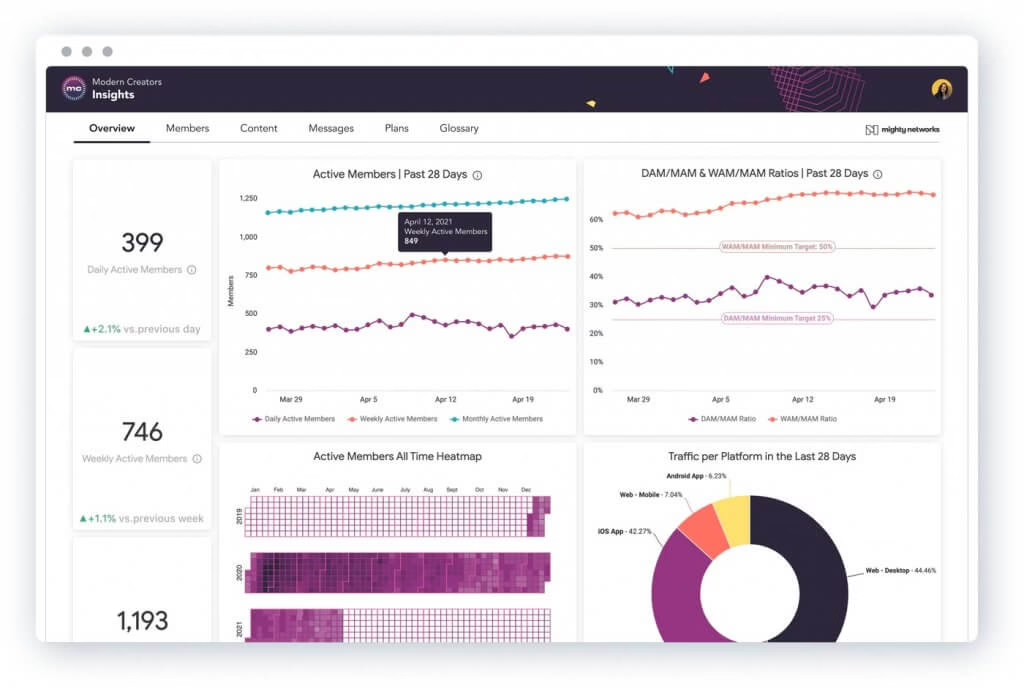
Likes and total logins tell you little on their own. A better system separates three things. Activity is what people do: posts, replies, reactions. Reach is how much of the membership returns or participates. Value is whether the space helps members solve problems, meet useful people, attend events or support revenue.
Benchmarks show why total membership misleads. A 2024 association community benchmark report found averages of 506 unique monthly users and 162 discussion activities per month. It also found that only 14% of logged-in users were actively contributing. Most people who sign in are reading, so participation is the number to watch. The same report found open rates of 43% for daily digests, compared with 59% for consolidated daily and weekly digests. That suggests fewer, better-bundled emails bring people back more reliably than frequent ones.
| Tier | What to track | Healthy sign | Red flag |
|---|---|---|---|
| Activity | Posts, replies and discussion actions per active member | Steady activity with replies, not only broadcasts | Posts routinely get no meaningful response |
| Reach | Returning and active members as a share of total membership | A growing group comes back across the month | Fewer than 5% of members post in a 30-day window |
| Value | Answers from peers, introductions, event attendance, product feedback | Members get help from people other than the host | Nearly every useful answer comes from your team |
Treat these as working thresholds, not universal laws. A specialist community with fewer posts can still deliver a lot if the answers are expert and fast. Across the wider industry, Higher Logic’s community engagement benchmark, covering more than 16 million users in 318 organizations, reported an 18% year-over-year rise in engagement scores built on those same three measures.
Before you report any of this, agree on definitions. “Active member” can mean logged in, posted or replied, and three people using three definitions will produce three numbers that start arguments. This piece on data driven leadership and metric definitions describes the same problem with revenue figures. The fix is the same for community: one definition, written down, used by everyone.
Then review the numbers once a week for about 20 minutes. Which discussions got replies? Did last week’s new members come back? Which prompts drew people in? Did members create value without your team getting involved? Make one change each week, such as rewriting a prompt, adjusting the digest or inviting a subject expert.
Build Systems So the Community Outlives You
Personal attention and scalable systems look like opposites. In practice, one leads to the other. You do the one-on-one work early, and you write down what works so other people can do it too. A community that depends on one person’s energy will fade when that person burns out, changes jobs or takes a holiday.
Document one process before you delegate anything: how a member gets from joining to making a useful contribution. Include the welcome message, the first prompt, the follow-up timing, examples of good contributions, and the point where a moderator steps in. Add the code of conduct, the escalation path and the weekly review routine. That document will shape the community more than its name or its platform.
A 90-day handoff plan
In the first 30 days, document the welcome flow, recurring prompts, escalation rules and weekly review. In the next 30, let a likely community lead run selected rituals while you watch. In the last 30, that person owns the calendar, the moderation review and the member feedback loop.
Hire for judgment, writing, follow-through and real interest in the members’ problem. Someone who only knows how to schedule posts will rebuild the announcement channel you have been trying to avoid. Set expectations about time as well. Communities grow more slowly than software or ecommerce. Building one usually takes years, and it depends more on culture and relationships than on headcount.
When to Charge for Community, and What to Keep Free
Don’t charge because the community feels busy. Charge when members can explain the value they get and you can deliver it without everything resting on one person. Three questions settle most of the decision:
- Are members returning and helping each other?
- Does the paid offer deliver a clear outcome beyond access?
- Can you support paying members with reliable moderation, content and service?
If the first answer is no, stay free and fix participation. If the first is yes and the second is no, improve the experience before adding a price. If all three are yes, test a small paid offer instead of putting the whole community behind a paywall.
Three revenue paths that work
Tiered membership works when members want more access to expertise. Keep the free layer useful, then add office hours, private feedback, templates or small-group support. Stacked Marketer is a good example. It grew from a single newsletter into a media company with several products, including a paid community, Stacked Marketer Pro. When we worked on Stacked Marketer’s redesign and user dashboard, the paid community had to sit alongside the free newsletter and the other products in one coherent member experience. It couldn’t feel like a separate site bolted on.
Paid events and cohorts work when members want a defined result. A workshop, review group or short course can sit on top of a free community, with a clear start, finish and outcome.
Premium sub-communities work when a particular group needs more privacy or relevance, split by role, industry or region. Create them when the conversation really is different, not to make the navigation look tidy.
Be careful with sponsors
Some long-running operators prefer membership fees and clear boundaries over sponsorship inside member communities. Their reasoning: once a sponsor is paying, members start to wonder whose interests the moderation and programming serve. Ads may be fine on a large public platform. In a small member community, they muddy the reason people trust the space.
The business case for community is often stated with big numbers. One compilation of online community statistics reports that 82% of brands use communities to support retention, and that 65% see a 15% to 20% lift in customer lifetime value from community members. Treat aggregated figures like these as a reason to look into community, not as a forecast for yours. Your members still have to show you they’ll pay for a specific benefit.
Keep some value free regardless. Generosity between peers, informal introductions and honest feedback tend to disappear when every interaction feels like a transaction. Charge for the structured outcome, not for goodwill. For more on the paid side, our guide on how to create a membership website covers pricing, onboarding and the technical choices that follow.
The Work Is Mostly Unglamorous
None of this is a launch tactic. A lasting community comes from answering the small question on a slow Tuesday, saying something honest when things go wrong, giving a member a real role, and writing down how all of it works so it can carry on without you. The platform, the paid tier and the growth come after that, and they only hold up if the relationships came first.
If you are working out what the member experience should be before you commit to a platform or a build, that is the kind of early decision Refact helps teams make. Our work on membership platform development starts with discovery, so the community you build fits the way your members actually behave.
Building a product and unsure what to scope first? Let’s talk. Free 30-minute call, no pitch.

Masoud Tahsiri works in growth and QA at Refact, focused on SEO, organic growth, and product quality. He helps the studio’s products get discovered, perform better in search, and stay reliable through testing, review, and continuous improvement. His work connects content strategy, technical SEO, automation, analytics, and quality assurance, giving him a broad view of how digital products grow after launch. At Refact, Masoud focuses on improving both visibility and reliability, making sure products are not only built well but also findable, measurable, and ready for users.
More from Masoud Tahsiri

