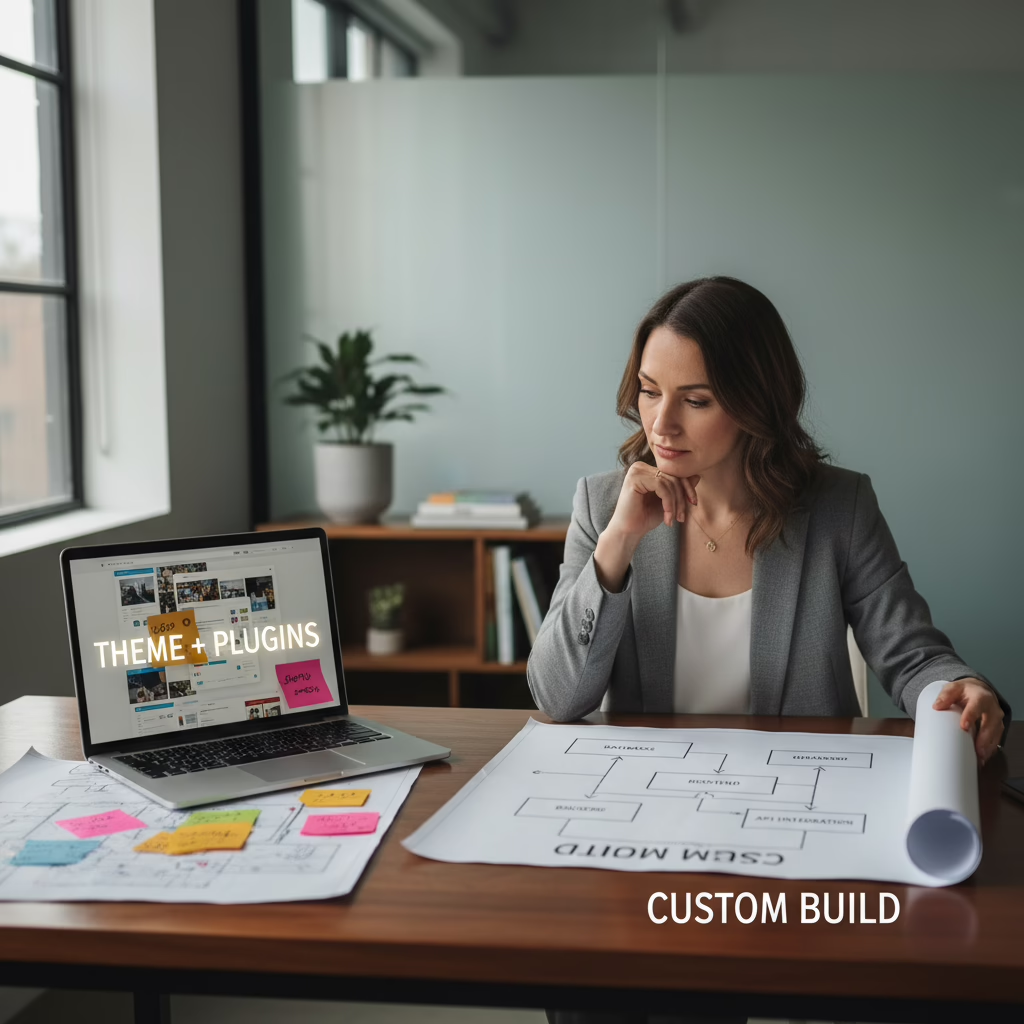


Your website should help you grow. If it feels like it fights you every week, that is a warning sign. A theme-and-plugins setup can be perfect at launch, then quietly turn into the thing that slows your team down. That is why founders start looking at bespoke WordPress web design, a site built around your real workflows, your real customers, and your next stage of growth.
This is not about making your homepage “prettier.” It is about removing friction, lowering risk, and building a foundation you can actually extend. If you are patching problems with one more plugin, this article is for you.
When Your Website Is Holding Your Business Back
Most founders start the same way. You pick a solid WordPress theme, add a page builder, install a few plugins, and ship. You get leads, you publish content, you prove the business works.
Then growth shows up, and the site starts to crack. Simple changes take too long. New features feel expensive. Updates break things. Your team starts avoiding the backend because it is annoying to use.
If that sounds familiar, you may be past the point where a theme can carry you. For a deeper comparison of when it makes sense to go custom, see our guide on custom WordPress website design.
Diagnosing the Bottleneck
The symptoms are usually clear in day-to-day work. The site might “look fine,” but it creates delays and mistakes behind the scenes.
For a publisher, the bottleneck is often the editorial workflow. Writers and editors fight the CMS to format stories, set up blocks, manage authors, or schedule posts. What should take two minutes takes 15.
For e-commerce, it can be checkout and product logic. You try to add a discount rule, a bundle, a custom shipping method, or a subscription plan. Plugins conflict, the UX gets weird, and conversion stops improving.
You have reached the point where adapting your business to a theme costs more than building a system around how you actually work.
For memberships, it might be access rules and user dashboards. You need tiered paywalls, member-only pages, and personalized content. You stitch together multiple plugins, then spend your time fixing data sync problems and answering support tickets.
The Problem Is Not “One Bad Plugin”
In most cases, the theme is not “broken.” It is just built for a generic website. The assumptions in that theme do not match your business model anymore.
This is where bespoke WordPress web design becomes a practical decision. A custom build gives you a stable base, clean code, and a backend that fits your team. Your site stops being a daily frustration and starts acting like an asset.
If you are exploring that shift, our website redesign services page explains what it looks like when a site becomes a growth tool again.
Custom Design Versus Off-the-Shelf WordPress Themes
When you hit a wall, you usually have two options. You can keep forcing the theme to do more, or you can rebuild around what the business needs now.
Think of it like buying a suit. Off-the-rack looks good on the mannequin. With a few tweaks, it can fit “well enough.” But it was made for the average person, not your exact shape.
A bespoke build is tailored. The structure, features, and admin tools are made for your business. You are not paying for generic features you never use. You are paying for the parts that make your company run.
The Trade-Offs You Actually Care About
Most conversations get stuck on upfront cost. That matters, but it is rarely the full story.
With a theme, your business adapts to the software. You change your workflow because the CMS is clunky. You change your landing pages because the page builder makes a simple layout hard. You accept slower performance because “that is just WordPress.”
With bespoke WordPress web design, the software adapts to your business. The CMS fits your content model. Your admin screens match how your team works. Your features are built to support the goals that matter: leads, sales, retention, and publishing speed.
If you are still deciding whether to stay with a builder or move away from it, our guide on choosing the right WordPress page builder can help you think through the trade-offs.
The Hidden Costs of Off-the-Shelf Themes
The biggest hidden cost is performance bloat. Themes try to serve everyone, so they ship with dozens of layouts, sliders, scripts, and settings. Even if you never use them, the code is still there.
That slows your site down. Slow sites lose conversions, increase bounce, and make SEO harder. It also makes future development harder because you are building on top of somebody else’s complex system.
Security is another hidden cost. Many themes depend on third-party plugin bundles. If one plugin is abandoned or poorly maintained, you inherit that risk. A bespoke build can reduce that risk by keeping the codebase smaller and more intentional.
A theme gives you a pre-built structure. You can repaint it, but changing the layout often means fighting the theme’s assumptions.
WordPress is still a strong foundation for custom work. It has a proven core, a large talent pool, and a huge ecosystem. A bespoke approach does not mean reinventing the wheel. It means choosing the right parts and building the missing pieces for your business.
Bespoke Design vs. Premium Themes: A Practical Comparison
Here is a simple comparison across the factors that usually affect the bottom line.
| Factor | Bespoke WordPress Design | Off-the-Shelf Theme |
|---|---|---|
| Initial Cost | Higher upfront investment | Low initial cost (typically $50 – $200) |
| Flexibility | Built to your specs and can evolve with your business | Limited by the theme’s options and code |
| Performance | Lean and fast, loads only what you need | Often bloated, slower load times |
| Long-Term Value | Scalable base, fewer rebuilds later | Workarounds pile up, redesign becomes unavoidable |
| Security | Smaller attack surface, fewer dependencies | Higher risk due to bundled plugins and mixed quality |
| Uniqueness | Design and UX reflect your brand | Often looks like many other sites |
A theme can be a quick win. But for many growing businesses, it becomes a ceiling. A bespoke build costs more upfront, but it buys you speed, stability, and control.
The Bespoke Web Design Process From Idea to Launch
If you have never done a custom build, the process can feel confusing. Some agencies make it feel like a black box. You submit a brief, then wait.
A bespoke project works best as a partnership. You should see progress, give feedback often, and understand what is being built and why.
Phase 1: Strategy and Discovery
Every good build starts with clarity. What is the problem you are solving, and what outcome do you want?
This phase maps your business goals, your user goals, and the friction inside your current site. We look at your content model, your sales flow, your membership rules, your editorial process, and anything else that affects growth.
This stage sets the direction for everything that follows. If the strategy is wrong, the build will be wrong.
The result is a blueprint. It defines scope, priorities, risks, and the key user journeys your site must support.
Phase 2: UI/UX Design and User Journey Mapping
Design is not decoration. It is problem solving.
We start with wireframes to map structure and flow. Then we move to high-fidelity mockups that show the final look and layout. Every button, field, and page has a job to do.
If your project also needs a brand refresh, the design phase is where that work fits. Our branding and design services page outlines how we handle identity and visual systems alongside website work.
For a more founder-friendly overview of these early steps, see our WordPress development founder’s guide.
Phase 3: Development and Collaborative Building
Once designs are approved, development begins. This is where mockups become real pages, templates, and CMS tools.
We build in sprints so you can review work as it happens. That keeps surprises small and decisions fast.
At this stage, teams also decide on architecture choices that affect performance and editing. That includes custom blocks, custom post types, integration patterns, and hosting needs. If you want to see what we deliver on the engineering side, our WordPress development services page covers the common build paths.
Phase 4: Testing, Launch, and Ongoing Work
Before launch, testing is non-negotiable. We test across devices and browsers, check forms and integrations, verify redirects, and review performance.
We also confirm tracking is correct, especially for teams that rely on paid traffic, newsletter signups, or subscription revenue. Launch is not the time to “hope analytics works.”
After launch, the real work begins. Your site will need improvements based on real user behavior. This is where ongoing website optimization support can pay off, especially for conversion and performance work.
How Much Does a Bespoke WordPress Site Actually Cost?
Founders want real numbers. You are right to ask.
Every project is different, but cost usually tracks with complexity. Not “how many pages,” but how much custom functionality is required. Bespoke WordPress web design is an investment in a system, not just a set of templates.
What a Realistic Investment Looks Like
Here are a few common scenarios.
A publisher site with custom editorial workflows, a flexible content model, and high-traffic performance requirements often includes:
- Custom content types for different article formats
- Admin tools for writers and editors
- Fast front-end templates for content discovery
Projects like this often take 4–6 months and land around $40,000–$80,000. The drivers are workflow tooling and performance requirements.
Custom e-commerce can cost more, especially if the business logic is unique. Subscription plans, special pricing rules, custom product configuration, and payment edge cases add time.
You are not just building a storefront. You are building the system that sells for you.
That kind of work can run 6–9 months and push past $100,000, depending on integrations and risk. If you want a clearer way to think about timelines, our guide on estimating software development time breaks down what affects delivery dates.
What Drives the Cost Up or Down?
The biggest cost drivers show up when your site has to behave like a real product.
- Complex integrations: CRM, ERP, inventory, analytics, ad systems, ESPs, and more. Each adds edge cases and testing.
- AI features: Recommendations, search, classification, or automation can add scope fast.
- Legacy migrations: Moving content, users, and SEO without breaking revenue requires careful planning. If this is on your roadmap, our website migration guide explains the risks and the checklist.
- Memberships and paywalls: Tiered access, billing rules, and dashboards can be simple or very complex. It depends on your business rules.
The goal is not to spend more. The goal is to spend on the parts that remove friction and protect growth.
Beyond the Build: An Ongoing Product Partnership
A new site is not the finish line. It is the starting point.
Six months after launch, you will have better data. You will see where users drop off. You will learn which pages drive revenue. You will also have new ideas that were not obvious at the start.
On a theme-based site, you often return to the same cycle. Search for plugins, patch conflicts, and hope updates do not break production.
From One-Time Project to Evolving Product
A bespoke site is easier to extend because the foundation is yours. You can add features without guessing how a theme author wired things together.
For example, a media publisher might learn that newsletter signups spike when the form appears after certain sections of an article. On a custom build, you can add that pattern directly into templates, connect it to your ESP, and measure it properly.
The long-term value is not only the build. It is having a team that understands your goals and your code when the next opportunity shows up.
How an Ongoing Partnership Works
After launch, the most common work falls into a few buckets:
- New features: Member dashboards, tiered paywalls, onboarding flows, custom content tools.
- Conversion work: Testing signup flows, checkout paths, pricing pages, and landing pages.
- Performance work: Keeping speed high as content and traffic grow.
- Scaling and modernization: Integrations, data migrations, and platform changes without a full rebuild.
If your site is a key part of how you acquire and keep customers, treating it like a product usually pays back fast.
So, What’s Next?
If your theme setup is starting to feel like a daily fight, that is real cost. It shows up as slower shipping, slower publishing, lower conversion, and more risk.
Bespoke WordPress web design is a good fit when your site needs to support real operations, not just “look good.” It gives you a foundation you can grow without constant patchwork.
The First Step Is a Simple Conversation
The next step is not signing a contract. It is getting clear on whether a custom build makes sense right now.
Before you talk with a partner, think about:
- Where does your team lose the most time? Publishing, checkout, lead capture, onboarding, member support.
- What is the one business goal the site fails to support? Leads, sales, retention, publishing speed, ad revenue.
- What breaks when you add “one more plugin”? Performance, reliability, security, or editing experience.
If you want help mapping the right path, schedule a strategy call. We will talk through your goals, your constraints, and what a custom build would need to do to earn its keep.
Frequently Asked Questions
These are the questions founders ask most when they are considering bespoke WordPress web design.
Is WordPress Secure Enough for a Custom Application?
Yes. Most WordPress security problems come from low-quality themes, outdated plugins, and poor maintenance practices.
A bespoke build can be safer because it reduces dependencies and keeps the codebase intentional. Security still requires good hosting, updates, and monitoring, but WordPress can be a strong base when it is built and maintained well.
WordPress core is not the usual problem. The risk often comes from untrusted add-ons and neglected updates.
Can a Bespoke WordPress Site Handle High Traffic?
Yes. Performance problems usually come from bloated themes, heavy page builders, and weak hosting setups.
Custom builds can be faster because they load only what they need. They also make it easier to tune caching, templates, and database usage as traffic grows.
What If I Need Features WordPress Does Not Have?
WordPress is more than a blog. It is an application framework with strong APIs and a flexible data model.
Common custom features include:
- Membership platforms with tiered access and recurring billing
- Custom dashboards with personalized content and account tools
- Paywalls with detailed business rules for publishers
In many cases, you can build what you need on WordPress, while still keeping the editor experience your team already knows.
At Refact, we build websites that act like real business assets. If your current theme setup is limiting growth, we can help you plan a better foundation and build it with you.