


You have a product idea you can’t stop thinking about. Now comes the hard part: turning that idea into instructions a team can build. That is where functional requirements examples help most.
When requirements are fuzzy, projects drift. People build different versions of the same feature. Budgets climb, timelines slip, and the product still misses the real goal.
Functional requirements describe what the system must do. They should be specific and testable. For example: “When a user clicks ‘Add to Cart,’ the item appears in their cart.”
If you want a simple way to capture this in one place, start with a PRD template for founders. It gives you a structure you can hand to design and engineering without rewriting everything later.
Below is a library of functional requirements you can copy, edit, and use. Each section includes a user story and acceptance criteria so you can turn “we need X” into something buildable.
1. User Authentication and Authorization Management
Most products need a way to confirm who a user is and what they can do. Authentication is identity. Authorization is permissions.
Write requirements here like you are mapping a series of doors. Who can open each one, and how? That includes login, logout, password reset, and role-based access.
Example: SaaS role-based access
In a B2B SaaS product, you may need roles like Owner, Admin, and Member. Your requirements should spell out what each role can see and change.
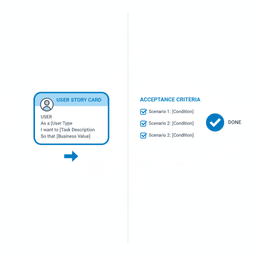
- User Story: As an account Owner, I want to invite new Admins and Members to my team so I can delegate tasks without giving everyone full control.
- Acceptance Criteria:
- Given I am logged in as an Owner, when I go to the Team Settings page, I see an Invite User button.
- When I enter a valid email and select the Admin role, the system sends an invitation email.
- The invited user cannot access billing information, but they can manage other team members.
Why this requirement matters
Login and permissions touch nearly every screen. If you patch it in later, you often have to rebuild whole flows. You also risk data exposure.
Actionable Takeaway: Do not build authentication from scratch. Use established services like Auth0, NextAuth.js, or Firebase Auth. They cover password resets, MFA, and social login patterns your team should not reinvent.
2. Payment Processing and Subscription Management
If your product charges money, your payment flow needs clear requirements. This is not only checkout. It is upgrades, downgrades, trials, failed payments, refunds, and receipts.
When payments are unclear, teams ship half a billing system. Then every edge case becomes a support ticket. Your requirements should describe the whole lifecycle.
Example: SaaS subscription upgrade
Say your product has Basic and Pro plans. The requirements should define what happens before, during, and after the charge.
- User Story: As a Basic user, I want to upgrade to the Pro plan by entering my payment details so I can access premium features immediately.
- Acceptance Criteria:
- Given I am logged in as a Basic user, when I click the Upgrade button, I am taken to a secure payment form.
- When I enter valid card information and confirm, the system processes the payment and my account is upgraded to Pro.
- The system sends a confirmation email with a receipt.
- I can access features that were previously locked.
Why this requirement matters
Billing bugs do not feel like normal bugs. They feel like broken trust. They also create accounting headaches that can take weeks to unwind.
Actionable Takeaway: Use a mature gateway like Stripe. Set up webhooks so your app can react to payments, failures, and disputes even if the user closes their browser.
3. Content Management and Publishing Workflow
If content is part of your product, the publishing process becomes product work too. Requirements for a CMS should cover drafting, editing, approvals, scheduling, and updates.
This is where “simple blog tools” often fall apart. A missing workflow step becomes a daily annoyance for your team.
Example: editorial approval workflow
A corporate blog might need writers and editors with different permissions.
- User Story: As an Editor, I want to review, edit, and approve articles submitted by writers before they can be published, so I can ensure content meets our standards.
- Acceptance Criteria:
- Given I am an Editor, when a Writer submits a post, I receive an email notification.
- When I open the post, I can view content and enter edit mode.
- I see two buttons: Approve for Publishing and Request Revisions.
- Clicking Request Revisions sends the post back to the Writer with my comments.
Why this requirement matters
A slow workflow slows everything else. Your content team ships less, and quality drops because reviews become rushed.
Actionable Takeaway: Write your ideal workflow first, then pick the CMS. For custom experiences, a headless CMS like Strapi or Sanity can be a good fit. For familiar tooling and plugins, WordPress is often the fastest path.
4. Search and Filtering Functionality
Once you have more than a small set of items, users will search. Requirements need to define what users can search, how results sort, and which filters exist.
Search is not a “nice to have” on large catalogs. It is how people find value in your data.
Example: ecommerce product filtering
An apparel store needs fast filters, not just a search box.
- User Story: As a shopper, I want to filter products by size, color, and price range so I can quickly find items that fit my needs and budget.
- Acceptance Criteria:
- Given I am on the Men’s T-Shirts category page, the filter sidebar shows Size, Color, and a Price slider.
- When I select Medium and Blue, the grid updates to show only blue, medium t-shirts.
- When I set a max price of $50, products over $50 are hidden.
Why this requirement matters
Bad search lowers conversions. Users assume you do not have what they want and leave. Good search also teaches you what customers expect.
Actionable Takeaway: Start with database search for small catalogs. As you grow, plan a move to a dedicated service like Algolia or Elasticsearch for speed and relevance tuning.
5. Data Import and Bulk Operations
Many products fail onboarding because setup takes too long. Imports and bulk actions solve that by letting users move large datasets into your system.
Requirements should cover file types, column mapping, validation, error reports, and what happens when imports partially fail.
Example: ecommerce product import
A new merchant wants to upload a product catalog, not retype it.
- User Story: As a new store owner, I want to upload a CSV file of my products so I can set up my store quickly without adding each item manually.
- Acceptance Criteria:
- Given I am on the Products page, when I click Import, a file upload modal appears.
- When I upload a CSV with correct headers (Title, Price), the system shows a preview.
- Upon confirming, the system creates new product entries for each valid row.
- If rows have errors, the system imports valid rows and provides a downloadable error report with row numbers and reasons.
Why this requirement matters
Imports reduce support load and speed up time-to-value. For B2B products, they are often the difference between “we’ll try it” and “this is too much work.”
Actionable Takeaway: Run long imports in the background using a job queue. Tell users when the job finishes, either by email or in-app notice.
6. Email Notifications and Transactional Messaging
Your product will talk to users outside the app. That includes receipts, password resets, invites, shipping updates, and billing warnings.
Requirements should list triggers, timing, recipients, and required content fields. These details reduce “Did it go through?” messages to your support team.
Example: ecommerce order confirmation
Order confirmation is a trust moment. Treat it like part of the product.
- User Story: As a customer, after I complete a purchase, I want to receive an email confirmation with my order details so I can be sure my order was received.
- Acceptance Criteria:
- Given a customer has completed checkout successfully.
- When the system processes the order, an Order Confirmation email is sent within 2 minutes.
- The email includes the order number, item list, total paid, and shipping address.
Why this requirement matters
Transactional emails have high open rates. When they are accurate and on time, customers feel safe. When they are missing, customers assume something broke.
Actionable Takeaway: Use an email service like SendGrid, Mailgun, or AWS SES. Focus your effort on triggers and content, not building email delivery from scratch.
7. Analytics, Reporting, Performance Monitoring, and Observability
You need visibility into what users do and how the system behaves. Analytics answers product questions. Monitoring and error tracking answer “is the app healthy?”
Requirements should define which events you track, which dashboards exist, and what alerts fire when something breaks.
If you are also thinking about post-launch improvements, connect this work to website optimization services so reporting and performance goals stay tied to business outcomes.
Example: ecommerce conversion funnel
A funnel report helps you see where users drop off in checkout.
- User Story: As a marketing manager, I want to see a funnel report of checkout so I can find drop-off points and improve conversion rates.
- Acceptance Criteria:
- Given I am on the analytics dashboard, I can view steps: View Product, Add to Cart, Begin Checkout, Complete Purchase.
- Each step shows total users and conversion percent from the previous step.
- The report can be filtered by date range.
Why this requirement matters
Without data, you guess. With data, you learn. Without monitoring, you find out about downtime from angry users.
Actionable Takeaway: Track key events from day one. Use tools like Segment for event collection and Sentry for error tracking. Set alerts for spikes in errors and slow response times.
8. API Development and Third-Party Integrations
Integrations help your product fit into real workflows. API requirements define how other systems read and write data, and how you keep it secure.
Write requirements for authentication, rate limits, endpoints, and webhook events. Also define what data must never be exposed.
Example: ecommerce order sync API
Inventory and fulfillment systems often need order data.
- User Story: As an external inventory system developer, I want to retrieve new orders as they are created so I can update stock levels automatically.
- Acceptance Criteria:
- Given I have a valid API key, when I send a GET request to
/v1/orders?status=new, the system returns a JSON array of new orders. - The API response does not include sensitive payment details.
- When an order changes to shipped, the system sends a webhook payload to my registered endpoint.
- Given I have a valid API key, when I send a GET request to
Why this requirement matters
Integrations can drive adoption because they cut manual work. But poorly defined APIs create support problems for years.
Actionable Takeaway: Publish clear API docs using OpenAPI (Swagger). Define versioning rules early so you do not break partners later.
9. Multi-Tenant Architecture and Customization
If your SaaS serves multiple companies, you need tenant separation. These requirements define how you isolate data, branding, and settings across tenants.
Multi-tenant mistakes are expensive. They can cause data leaks and performance issues that are hard to patch later.
Example: SaaS tenant-specific branding
Many B2B tools let each organization set a logo and colors.
- User Story: As an organization Admin, I want to upload our logo and set brand colors so the platform feels like our own.
- Acceptance Criteria:
- Given I am an Admin for Tenant A, when I open Branding settings, I can upload a logo and select a primary color.
- When I save, the header shows Tenant A’s logo and uses the selected color for buttons and links.
- A user from Tenant B continues to see Tenant B’s branding.
Why this requirement matters
Multi-tenancy supports scalable SaaS economics. But it only works if isolation is strict and tested.
Actionable Takeaway: Make
tenant_ida required part of your schema from day one. Filter every query by it. If you use PostgreSQL, Row-Level Security can help enforce this at the database layer.
10. Accessibility and Progressive Enhancement
Accessibility requirements define how people with disabilities use your product. Progressive enhancement defines the baseline experience across devices and network conditions.
This is not only a compliance issue. It is also product quality. Good keyboard support and semantic HTML often improve SEO and usability for everyone.
If you want accessibility and UX to be part of the plan, tie it to branding and design services so design decisions match real user needs.
Example: ecommerce product page accessibility
Product images must be understandable to screen reader users.
- User Story: As a shopper with low vision using a screen reader, I want to hear a clear description of product images so I can understand what the product looks like.
- Acceptance Criteria:
- Given I am using a screen reader, when I navigate to a product image, the screen reader announces descriptive alt text.
- The alt text is useful (for example, “Red crewneck sweater made of merino wool”), not a filename.
- All clickable image thumbnails also have descriptive alt text.
Why this requirement matters
Retrofitting accessibility later costs more and creates rework. Building it in early also helps you pass enterprise reviews and reduces legal risk.
Actionable Takeaway: Use automated checks (axe, WAVE), then do manual testing. Navigate with only a keyboard. Test with a screen reader like NVDA or VoiceOver.
10 functional requirements comparison
| Feature | Implementation complexity | Resource requirements | Expected outcomes | Ideal use cases | Key advantages |
|---|---|---|---|---|---|
| User Authentication and Authorization Management | High, security critical, needs careful design and testing | Moderate to high, dev effort, security ops, possible third-party fees | Secure access, scalable roles, compliance readiness | SaaS, membership, ecommerce, publishers with subscriber tiers | Protects data and supports SSO and compliance, prefer proven auth providers |
| Payment Processing and Subscription Management | High, tax, retries, and lifecycle complexity | High, gateway fees, accounting integration | Reliable revenue capture, automated billing | SaaS subscriptions, ecommerce, membership platforms | Supports monetization at scale, plan retries and cancellations early |
| Content Management and Publishing Workflow | Medium to high, rich editors and approvals add complexity | Moderate, CMS, media storage, editorial UX work | Faster publishing, SEO improvements | Publishers, media, education, content teams | Gives non-dev teams control, headless for flexibility, WordPress for ecosystem |
| Search and Filtering Functionality | Medium to high, indexing and relevance tuning | Medium, search infra and indexing work | Better discovery, higher conversion | Ecommerce catalogs, large archives, directories | Improves UX and revenue, start simple then scale to managed search |
| Data Import and Bulk Operations | Medium, validation and async processing | Low to medium, job queues and validation rules | Faster onboarding, easier migrations | Migrations, inventory onboarding, subscriber imports | Preview before import, row-level errors, idempotent behavior |
| Email Notifications and Transactional Messaging | Medium, templates and deliverability | Low to medium, ESP costs and queuing | Timely communication, fewer support tickets | Account actions, order flows, membership alerts | Use ESPs, test templates, define triggers clearly |
| Analytics, Reporting, Performance Monitoring, and Observability | High, data pipelines and alerting | High, tooling, storage, dashboards | Metrics clarity, faster issue detection | SaaS dashboards, ecommerce funnels, publisher metrics | Define KPIs, instrument key events, set alerts for failures |
| API Development and Third-Party Integrations | Medium to high, design, auth, versioning, docs | Medium, documentation, auth, monitoring | Ecosystem growth, automations | Integration-heavy platforms | OpenAPI docs and predictable versioning drive adoption |
| Multi-Tenant Architecture and Customization | Very high, isolation and testing are hard | High, DB design, monitoring, feature flags | Scalable SaaS operations, customization | B2B SaaS, white-label platforms | Tenant isolation must be enforced everywhere, test it constantly |
| Accessibility and Progressive Enhancement | Medium, needs inclusive design and testing | Low to medium, audits and dev time | Broader audience, better UX and SEO | Government, education, publishers, enterprise SaaS | Semantic HTML and keyboard support prevent painful rework later |
From fuzzy ideas to a buildable plan
You just saw ten categories of functional requirements. The pattern is the same each time: turn a vague goal into a testable set of actions.
Instead of “add login,” you define roles, screens, and outcomes. Instead of “accept payments,” you define upgrades, receipts, and failure handling. This is how you protect your budget and avoid rework.
If you are still deciding what to build first, read MVP vs prototype. That decision changes what requirements you should write right now.
The power of precision
Vague requirements cause scope creep. Clear requirements stop it. They also help you make product decisions early, before code locks you in.
Your goal is not to become an engineer. Your goal is to explain what you want in a way a team can test and ship.
Use these rules to write better specs fast:
- User stories keep you honest: “As a [user], I want [action], so that [benefit].”
- Acceptance criteria define done: If all criteria pass, the feature works. If not, it is not finished.
- Inputs and outputs remove ambiguity: This matters most in billing, imports, and integrations.
Your next steps
Do not leave these examples in a tab. Put them into your doc today.
- Pick one core feature: Choose the one feature your product cannot live without.
- Write the happy path user story: Describe the ideal success case in one sentence.
- Add at least five acceptance criteria: Focus on what must be true for the user to succeed.
If you need help turning requirements into a build plan, we can support strategy, design, and delivery through our website development services. If you need technical leadership to shape the roadmap and keep decisions moving, consider Virtual CTO services.
Ready to turn your idea into buildable requirements? talk to Refact.


